
Across the United States, schools and academies must manage a highly competitive environment with restricted budgets. Strong marketing strategies help these institutions stand apart, boost enrollment, and make better use of available resources. That need is especially important for districts, independent schools, and multi-academy trusts.
Improve Your School’s Online Visibility
The Education Marketing Agency brings more than 20 years of experience. Their services include dynamic websites, Open Day campaigns, and reputation management. They also provide recruitment support. Liaison Enrollment Marketing adds omnichannel enrollment tactics and AI tools for a seamless journey from outreach to enrollment.
SEO For Private Schools centers its work on increasing search visibility for schools. Its approach emphasizes local SEO and voice search optimization to attract nearby families. That helps drive more qualified visitors to the website.
Leading practices combine audience research, persona development, and student journey mapping. They also rely on mobile-first websites, chatbots, short-form video, and community storytelling. Target River and Caylor Solutions show how integrated campaigns can significantly increase enrollment. They accomplish this through video, social advertising, and targeted outreach.
This article provides actionable marketing solutions for schools and academies. These approaches can help leaders raise enrollment, protect reputation, and create value even when budgets are tight.
Why Schools And Academies Need Strategic Marketing
Schools and academies function within a dynamic environment. Local competitors, new charter schools, and online programs continue to reshape how families make education decisions. That is why effective school marketing strategies are essential. They help institutions differentiate themselves, attract the right families, and safeguard their reputation without breaking the bank.
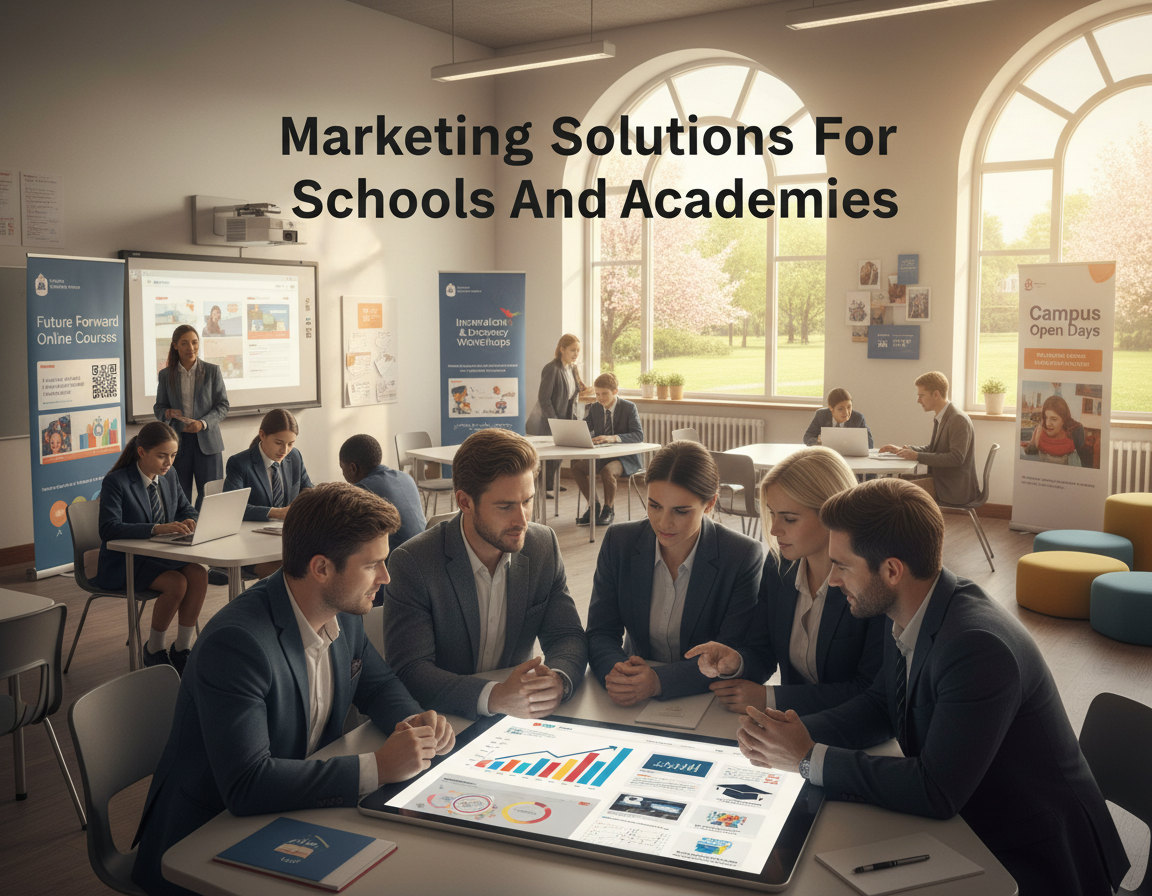
Changing Education Marketplace And Competition
The rise of private academies and virtual schools has intensified competition. Schools that use targeted marketing strategies and understand the student journey often gain attention earlier. By building clear personas and tailoring messages, they improve the move from awareness to inquiry.
Budget Constraints And Enrollment Pressure
With declining student numbers and tighter budgets, schools must find cost-effective recruitment methods. Focused advertising and strategies for increasing student enrollment are vital. Agencies can leverage variable printing, AI tools, and targeted campaigns to boost inquiries while monitoring ROI.
Managing Reputation Across Multiple Stakeholders
Clear communication is essential for keeping parents, staff, governors, and the wider community informed and confident. Marketing solutions for schools and academies must blend transparent messaging, social proof, and crisis-response planning to protect reputation. Consistent outreach and local SEO efforts help support Ofsted expectations while strengthening trust.
| Key Challenge | Practical Approach | Likely Outcome |
|---|---|---|
| Increasing local competition | Audience personas paired with tailored Open Day promotion | Higher-quality inquiries and improved conversion |
| Restricted marketing spend | Prioritized tactics with measurable KPIs and targeted ads | Stronger ROI and more efficient spending |
| Reputation risk with multiple stakeholders | Transparent governance communications and community events | Improved community trust and readiness for accreditation |
| Shifting recruitment climate | AI-supported omnichannel outreach and local SEO | Ongoing student enrollment growth support |
Core School Marketing Strategies And Channels
Effective marketing mixes are essential for schools to engage with families, fill classrooms, and establish trust. Begin with a mobile-first website that guides visitors from interest to enrollment. Incorporate chatbots for immediate responses, predictive content to highlight relevant pages, and clear calls to action on every page.
The Website As The Enrollment Hub
Focus the site on user tasks such as tour signups, program details, tuition information, and contact forms. Run Core Web Vitals audits and improve accessibility to support inspections such as Ofsted. Personalize landing pages for feeder schools and use CRM data to tailor follow-ups. These efforts reduce bounce rates and increase applications, strengthening school outreach campaigns.
Optimizing For Local SEO And Voice Search
Optimize your Google Business Profile and incorporate location modifiers into content. Use conversational phrases such as “best charter school near me” to capture voice searches and featured snippets. Implement structured data for address, hours, and events to enhance local visibility on Google Maps.
Using Social Media And Short-Form Video
Use Instagram Reels and TikTok to highlight campus life, student achievements, and alumni success stories. Repurpose newsletters and long-form content into short clips, carousels, and infographics. Social proof, such as testimonials and day-in-the-life videos, builds trust and appeals to Gen Z and parents.
Omnichannel Outreach And Paid Digital Advertising
Create omnichannel funnels that integrate search, paid social, display, email, and targeted mailers. Drive traffic to landing pages with clear CTAs. Combine digital ads with Open Days and local partnerships to capture leads and nurture them through CRM automation.
Use tools such as event schema, FAQ schema, chatbots, and analytics to track attribution and performance lift. Agencies focused on SEO For Private Schools can tailor local SEO and paid digital advertising for academies to meet the unique needs of private and academy markets in the United States.
Branding, Messaging, And Content That Converts
Effective positioning can turn casual interest into actual visits and applications. Start by mapping the journeys of parents of elementary students, high-school families, adult learners, and prospective staff members. Use these paths to define compelling unique selling points (USPs) that address motivations and pain points. That process will help guide budget decisions related to school branding techniques and academy promotion services.
Develop personas that reflect genuine priorities and concerns. For instance, parents of younger children often prioritize safety and community. Families with high-school students tend to focus on college readiness and career preparation. Adult learners usually want flexibility, while staff candidates often look for professional support and development. Align your messaging with your governance and values to ensure authenticity and legal compliance.
Unique Selling Propositions And Persona Definition
Identify key needs and match a distinct USP to each persona. For example, promote a STEM pathway to college-focused families and evening classes to working adults. Persona-driven choices help prioritize tactics, timelines, and spending for student enrollment growth solutions.
Test concise benefit-led statements in emails, landing pages, and Open Day messaging. Measure which messages improve click-through rates and conversions. Use this data to refine your USPs and enhance the efficiency of your academy promotion services.
Storytelling, Trust, And Social Proof
Authentic human stories build trust quickly. Capture student interviews, alumni outcomes, teacher spotlights, and parent testimonials to weave an emotional thread across channels. Then repurpose longer profiles into short social videos and newsletter teasers to extend reach.
Feature social proof on high-value pages such as prospectuses, application landing pages, and event registration pages. Campaigns that blend storytelling with targeted social advertising often generate more signups and stronger word-of-mouth.
Building Content Strategy, SEO, And Structured Data
Develop a content strategy for schools that aligns topics to search intent: how-to guides, enrollment pages, campus tours, and scholarship information. Optimize pages for featured snippets and local queries to capture zero-click traffic.
Apply schema markup for education such as FAQ, Event, and Article types to improve rich results and CTR. Technical work should include site audits, metadata updates, fixing broken links, and improving Core Web Vitals to support student enrollment growth solutions.
Distribute content across blogs, email, and social. Use paid amplification and nurture sequences to move prospects down the funnel. AI tools can accelerate research and production, but human voices should remain central to preserve E-E-A-T and authenticity in academy promotion services.
| Core Component | Primary Audience Persona | Recommended Tactic | Key Measurement |
|---|---|---|---|
| USP And Messaging | Parents of younger students | Safety, community stories, campus tours | Application starts, open rates, and tour bookings |
| Academic Program Promotion | High-school families | Alumni success profiles, curriculum pages | Lead quality, enrollment conversions |
| Adult Learner Outreach | Adult learners with jobs | Evening-class pages and testimonial-driven messaging | Registration rate and course completion |
| Staff Recruitment Messaging | Future staff members | Teacher stories and benefits-focused pages | Hire rate and apply clicks |
| SEO & Structured Data | Local searchers | Content strategy for schools, schema markup for education | Rich result impressions and organic traffic |
School Services, Campaign Management, And Measurement
A strong measurement plan turns marketing activity into useful insight. Within educational institution marketing, tracking metrics across the enrollment funnel shows which tactics move families from first interest to completed application. Use a mix of analytics, CRM records, and marketing automation to capture behavior and attribute results.
Key Performance Indicators And Analytics
Prioritize enrollment KPIs that reveal real progress, including website visitors, inquiry rate, application starts, Open Day registrations, event attendance, lead quality, cost per lead, enrollment yield, and retention. Google Analytics and Search Console help map both discovery patterns and on-site behavior.
Connect CRM data with marketing channels so you can see which ads, organic pages, and emails generate the strongest inquiries. Use marketing automation to score leads and highlight bottlenecks in the funnel.
Examples Of Multichannel Campaigns And Case Studies
Real campaigns blend paid, organic, and community tactics. One K-12 district that paired video storytelling with targeted social ads and neighborhood outreach recorded a 38% increase in registrations. Higher-ed programs that pair email journeys with campus events engage adult learners and boost conversion.
Design multichannel campaign for schools to match audience segments. Test creative across platforms, track enrollment KPIs by channel, and keep refining landing pages and calls to action.
When Schools Should Hire An Agency
Consider agencies for school marketing when internal teams lack bandwidth or specific expertise in enrollment cycles. Agencies can provide strategy, creative support, technical implementation, campaign management, and measurable reporting.
Expect clear scopes, transparent pricing, and collaboration with school leaders. Providers such as The Education Marketing Agency and Liaison Education offer education-specific services without hidden mark-ups, and they can also provide platformized options when appropriate.
Available Service Models And Tools
Available service models range from retained full-service agencies to platformized enrollment marketing and specialist providers focused on SEO or paid media. Choose a model that fits budget and governance while preserving control over messaging.
Common tools include AI content creators, chatbots, CRM and marketing automation, Google Business Profile management, PageSpeed and Core Web Vitals tools, structured data implementations, paid social and search platforms, analytics dashboards, and on-demand print services.
| Service Model | Main Offerings | Best For | Key Tools |
|---|---|---|---|
| Full-Service Agency | Strategy, creative, campaign management, reporting, reputation support | Districts and independent schools needing end-to-end support | CRM, marketing automation, paid media, video production |
| Platformized Enrollment Marketing | AI workflows, omnichannel outreach, variable printing, and dashboarding | Systems that need scalability and predictable monthly pricing | AI content tools, chatbots, analytics platforms, print services |
| Specialist SEO & Organic | Structured data, local SEO, content strategy, and Core Web Vitals | Private schools and academies focused on organic discovery | Search Console, PageSpeed tools, CMS optimization, content tools |
| On-Demand Campaign Support | Open Day campaigns, project support, ad creative, and setup | Schools whose internal teams need seasonal support | Landing page builders, paid social/search tools, and email automation |
Track performance weekly, review enrollment KPIs with stakeholders, and refine school marketing strategies based on data. When campaigns span multiple channels, accurate attribution makes it easier to optimize spend and improve yield.
Conclusion
Schools and academies seeking consistent enrollment growth must adopt a strategic approach. Start with detailed audience research and well-built personas. Make sure the website functions as the main hub for mobile-based enrollment activity.
Combine local SEO and voice-search optimization with short-form social video and paid omnichannel campaigns. That approach helps reach families while they are actively searching and engaging.
Effective school branding and storytelling foster trust. Utilizing SEO services tailored for private schools in the U.S. enhances local visibility. Analytics, CRM integration, and enrollment-focused KPIs are essential for testing, refining, and scaling what works.
This method transforms education advertising into a predictable means for increasing student enrollment.
Implementing practical steps is vital. Start by auditing Core Web Vitals and conversion flows. Then optimize the Google Business Profile and local listings. Create short-form video assets and conduct a paid social/search test.
Allocate your budget based on enrollment goals. Prioritize the channels that show proven ROI. Work with transparent partners, whether they are platformized vendors or full-service agencies, so outcomes can be executed, measured, and improved over time.
Related: Search Optimization Company For LA